
“What I cannot create, I do not understand.” -- Richard Feynman
We believe students understand mathematics more deeply when they create with it.
To realise that vision, we built an intuitive coding language that helps students create mathematical objects and visualisations from scratch.
No premade sliders. Designed for anyone to see math differently.
Students think through each step of the process, learning to debug their code and their own thinking.
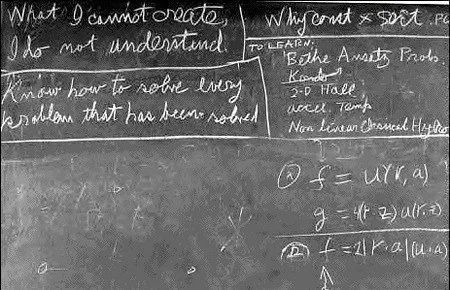 One of Feynman’s last blackboards.
↩
You’ll be surprised how far a little math and computing knowledge can take you!
Why add computation?
Because some mathematical ideas become much easier to understand when students can build them, change them and see what happens. It is the same instinct behind the question every student asks.
p.s. zero coding background required to start!
Modelling and experimenting
Mathematical formulas often show us the distilled result of an open-ended exploration. By building these visualisations ourselves, we are recreating the conditions to understand how these concepts came to be!
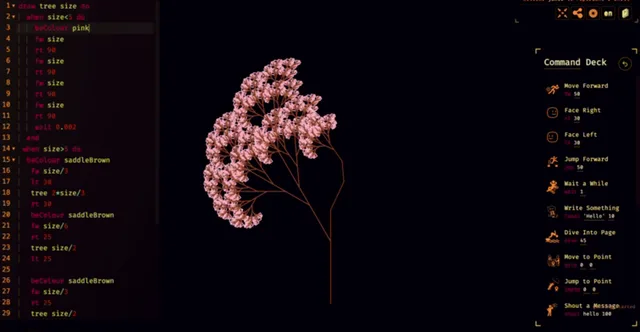
Amplifying our ideas
Computation lets us explore movement, randomness and repeated processes that would be difficult to investigate by hand.
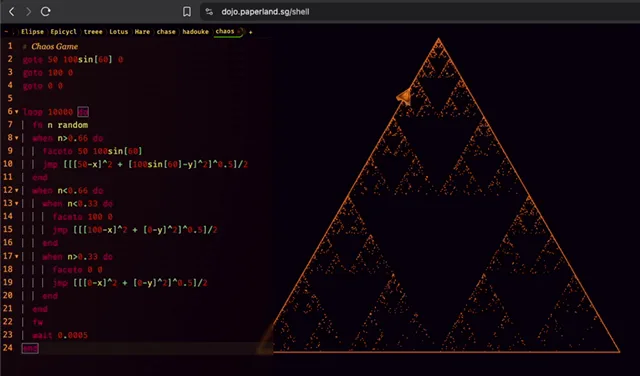
Artistic Connections
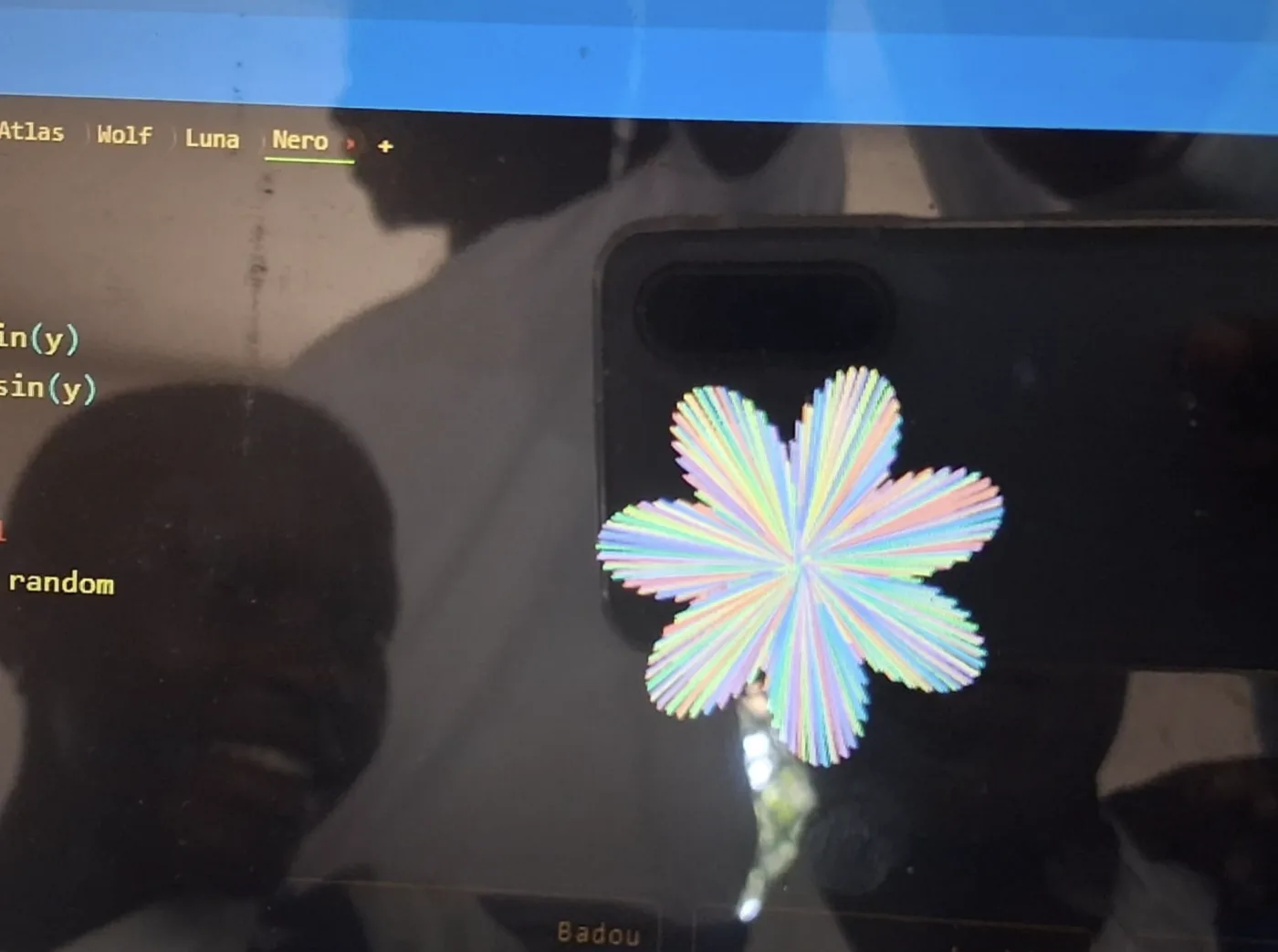 A student-made flower, drawn with trigonometry functions and a little randomness.
↩
Many “art” students struggle with math because it feels “rigid and lifeless”. In reality, math is deeply creative!
Students can express mathematical ideas through patterns, animations and artworks of their own. To create something they care about, they have to understand the mathematics well enough to make it their own!
Low-Floor-High-Ceiling
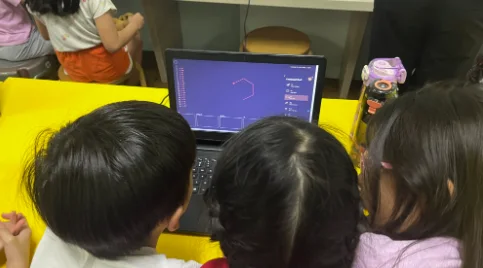
We always start with mathematical ideas familiar to middle and high school students. The goal is to get students curious enough to ask their own questions first!
Over time, those questions grow, and deeper mathematics becomes something they want to learn because it helps them go further.
Give their ideas a stage
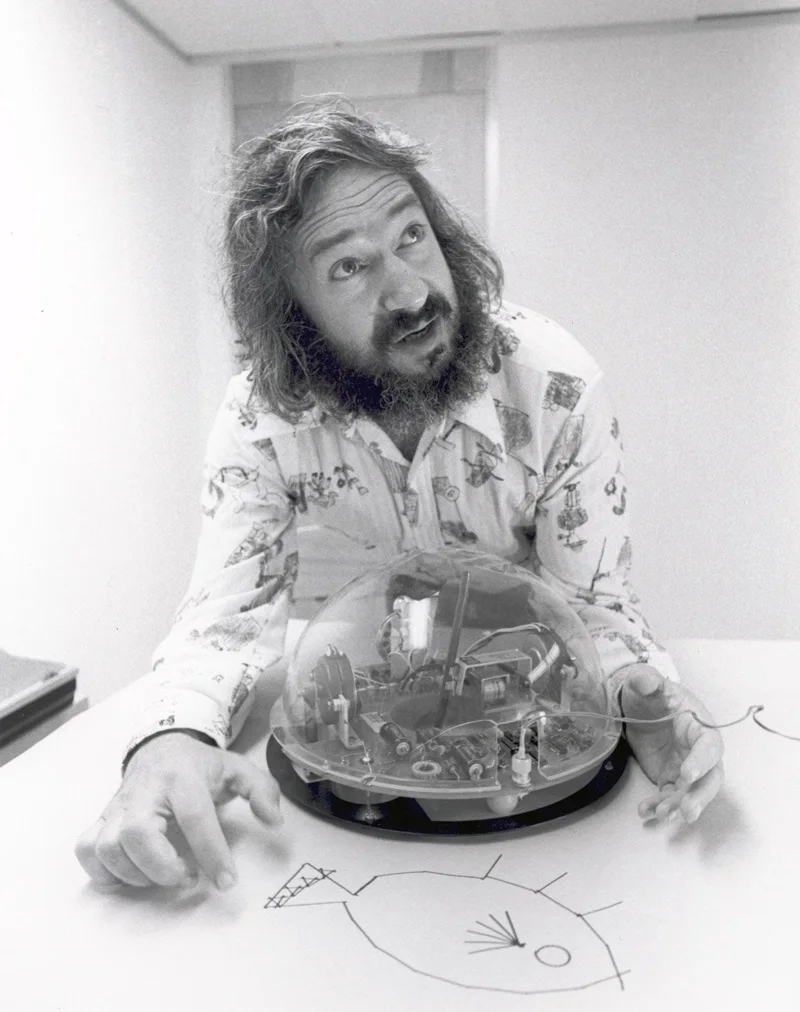 Seymour Papert and a computer turtle, MIT, 1973. Photograph: Susan Pogany.
↩
“The role of the teacher is to create the conditions for invention rather than provide ready-made knowledge.” -- Seymour Papert
A platform to play with math is just the beginning. A showcase gives students something to work towards: a chance to share what they’ve created, explain their thinking and invite others to see mathematics differently.Math Takes the StageExperience math differently
Imagine your students:
- Presenting at a math symposium, using animations and interactive models to share their investigations.
- Sharing films, artworks and stories at a math festival, bringing mathematical ideas to life for an audience.
- Leading workshops for their peers, helping others explore and create with mathematics.
We work with schools and mathematics organisations to make these showcases happen. Starting with what students will create and share, we shape a programme of inquiry, creative work and practice to help them get there.